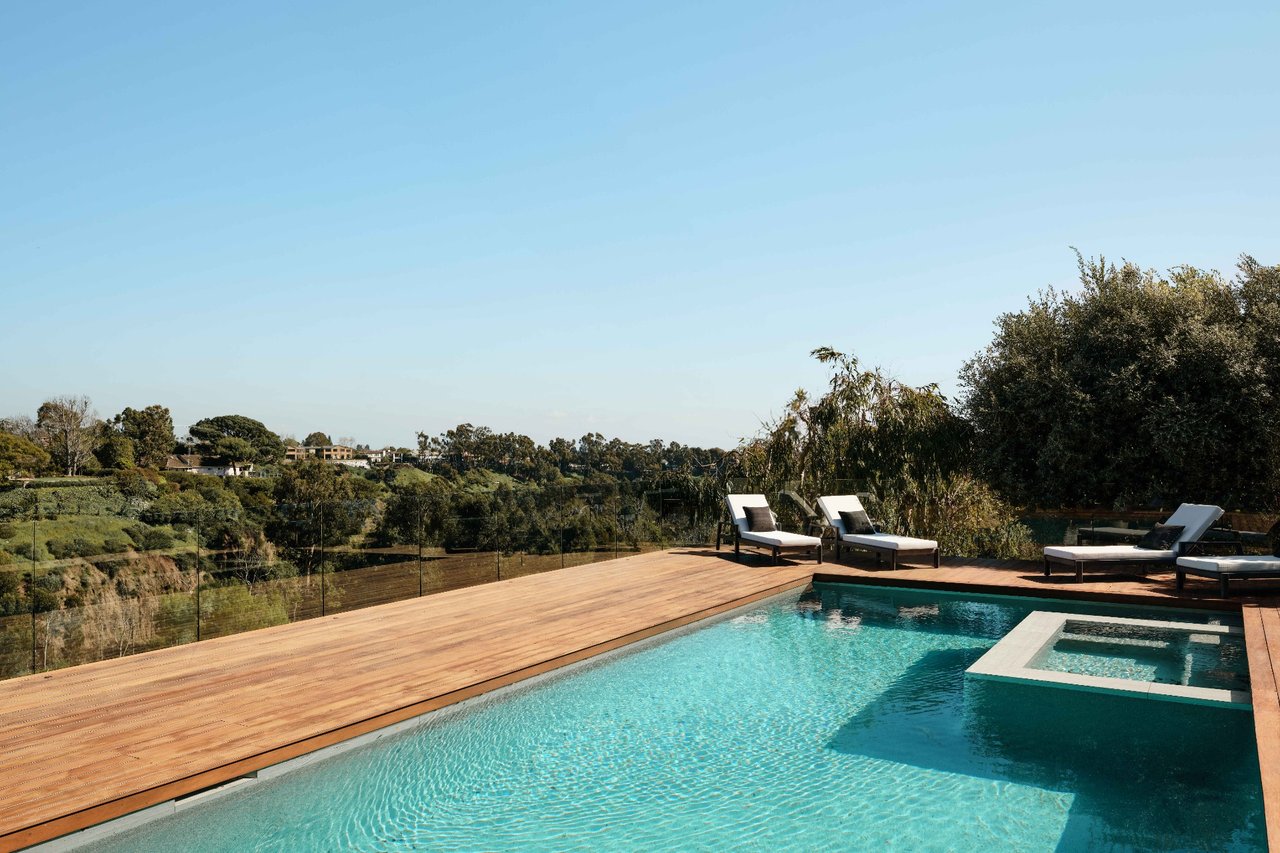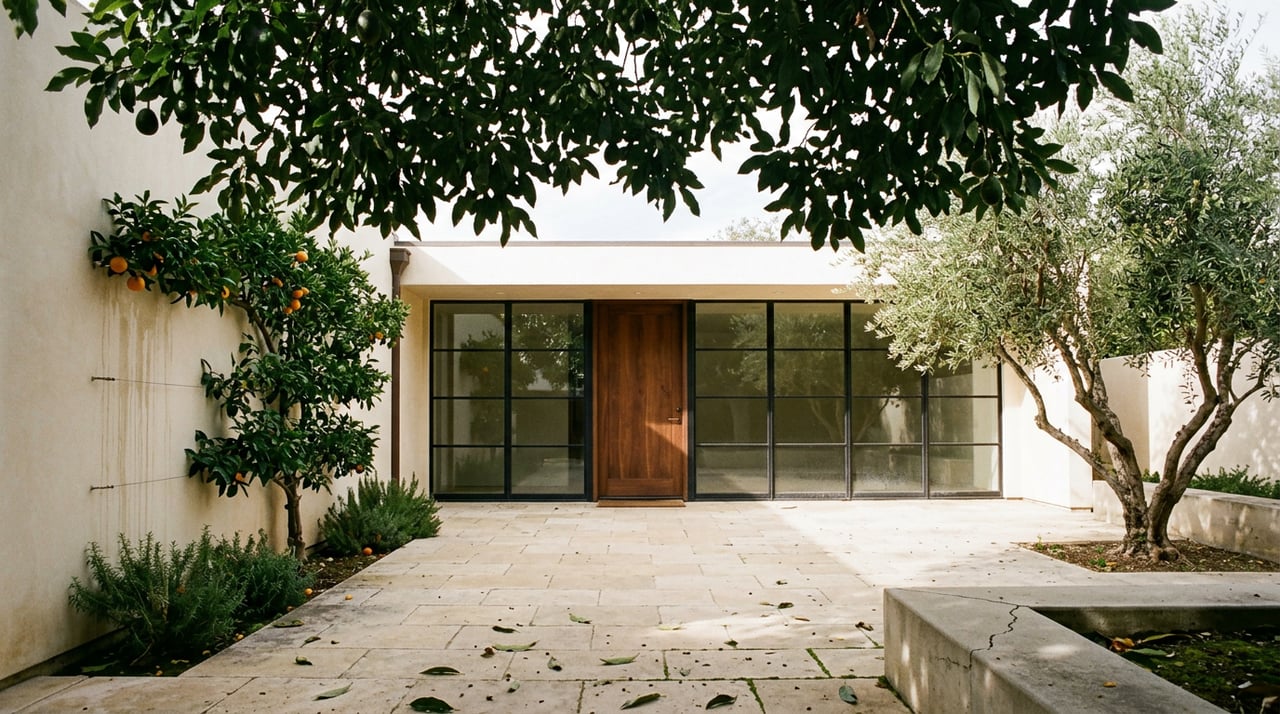
Walk North Curson Avenue between Hollywood Boulevard and Franklin, and you will pass a stretch of iron fence that looks like it belongs to a private estate. It does, in a way. Behind it sits a mansion designed in 1907 by Myron Hunt and Elmer Gray, the same architects who later gave the city the Beverly Hills Hotel and the Rose Bowl. Below the mansion, past a locked gate, is 4.2 acres of citrus trees, vegetable rows, and avocados older than the Hollywood sign itself.
Behind the gate is a community garden with a membership process.
What Everyone Walks Past
Hollywood Hills real estate is often discussed in terms of price per square foot, view lines, and proximity to Runyon Canyon. Wattles Farm offers another way to experience the neighborhood.
Wattles Farm sits on land the city bought from the Wattles family in the late 1960s, and since 1975 it has operated as a community garden under a program Mayor Tom Bradley started to put public land into private hands, one raised bed at a time. Getting a plot today has nothing to do with what you earn. It has to do with whether you show up.
The garden is two blocks from Grauman's.
Forty-Nine Acres Down to Four
The math on how we got here is worth sitting with. Gurdon Wattles, an Omaha banker, built his winter estate here in 1907 on close to 49 acres, with four separate gardens on the grounds: Spanish, Italian, Japanese, and American. He opened them to the public, and for a while Jualita, as the estate was known, was one of Hollywood's first tourist draws.
The city bought the property in 1968. A private preservation group called Hollywood Heritage took over stewardship of the mansion itself in 1983 and ran it as their headquarters for the next 26 years, restoring woodwork and replanting grounds that had gone to mud. That arrangement ended in 2009, when the mansion reverted to the LA Department of Recreation and Parks, where it remains a designated Cultural Monument.
The garden below the mansion followed a separate path. When thirty volunteers first cleared the neglected lower 4.2 acres in 1975, they found something worth saving: 141 surviving avocado trees, some of them transplants rescued decades earlier from the old Doheny estate when it was cleared for a Main Street construction project downtown. Those trees are still bearing fruit. Members are still eating it.
What's Actually Growing
Ask what's planted at Wattles Farm on any given week and the honest answer depends on who has the plot next to yours. The garden's roughly 300 members shape what's grown in the rows: tomatoes, cucumbers, and dill through the summer, beets and hardy greens once the weather turns. It is closer to a working allotment garden than a showpiece, which is exactly why it has lasted fifty years without becoming a tourist stop.
The century-old avocado grove still frames the paths, along with citrus that predates the current garden by decades. None of it is for sale. None of it needs to be. It grows for the people tending it, which is a different kind of value than anything measured in a listing.
The Way In
Wattles Farm's membership page describes the process:
- Live within five miles of the garden and submit a membership application.
- Show up for three consecutive monthly Community Clean-Ups, the 1.5-hour work sessions held most second weekends of the month, so the garden's members can get to know you before you get a key.
- Once approved, wait for a plot to open, which happens at irregular intervals since spots rarely turn over.
- When one does, a Garden Master gives you a tour, hands you a key, and collects a one-time $22 entrance fee plus annual dues that run in the $185 to $200 range, due each June.
Alongside its membership program, the garden has also welcomed visitors for occasional public dinners.
A Dinner and the Cost of a Garden Plot
Wattles Farm has hosted the traveling dinner series Outstanding in the Field more than once, most recently on June 21, 2026, with head gardener Toby Leaman serving as host farmer for a long table set up between the vegetable plots and fruit trees. Past seatings at this same garden have priced around $375 a head.
Compare that to the $22 one-time entrance fee for a working member, plus annual dues for as long as you keep a plot. At roughly $375, one evening as a guest costs about seventeen times the one-time $22 entrance fee. The dinner buys you a single warm night at a garden where membership requires an application, work sessions, a wait for a plot, and the listed entrance fee and annual dues.
The dinner and the garden's membership program offer two different ways to experience the site: one for an evening, and one through ongoing participation.
What This Actually Means If You Live Here
The gate on Curson isn't a secret. It has a website, a membership form, and a monthly work schedule anyone can look up. Neighbors interested in joining can find the application and work schedule online. Wattles Farm is a garden two blocks off Hollywood Boulevard where membership involves work sessions, an entrance fee, and annual dues.
If you're already living in the Hollywood Hills, that's worth knowing the next time you walk past Curson and wonder what's behind the fence. You can decide whether its membership process fits your routine.
If you're thinking about what else this hillside holds, or what a property near it is actually worth in today's market, Aaron Kirman has spent close to three decades reading Los Angeles at street level, not just at the listing price. Let's Connect.